Revolutionizing Family Offices with AI-Driven Technology
Explore how AI-driven technology is reshaping family office operations and strategies in 2026.
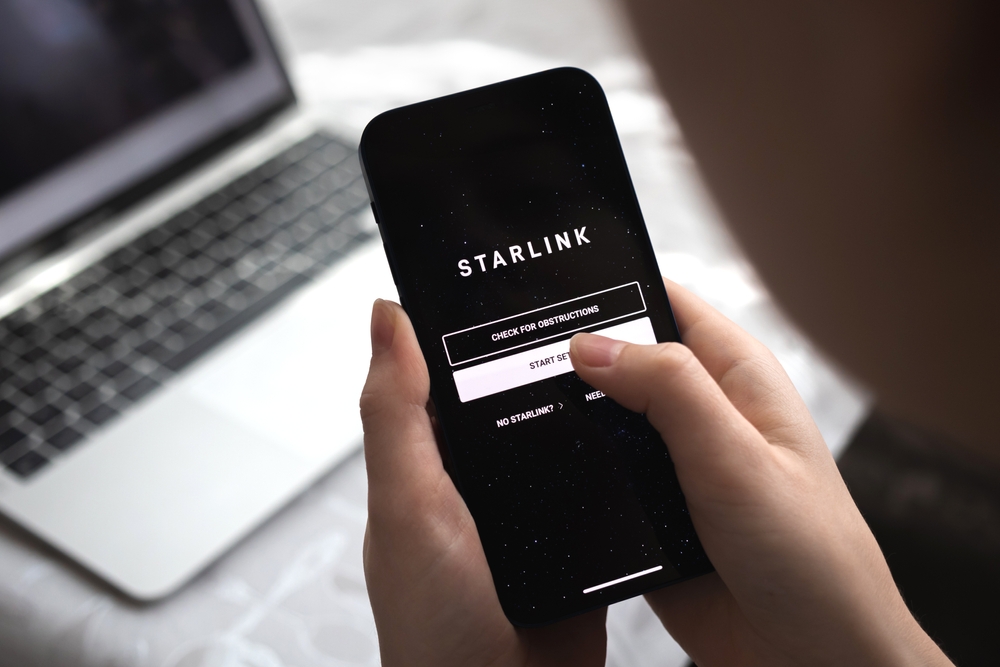
Well, well, well. It seems the techno-oligarchs have decided that having a moment’s peace without internet access is simply too much to bear for the modern human. Elon Musk’s Starlink, not content with littering our night skies with a constellation of satellites, has now received the green light from America’s Federal Communications Commission (FCC) to begin testing its Direct-to-Cell service with T-Mobile in Oregon, Nevada, and Kansas. One can almost hear the collective sigh of relief from billionaires worried they might lose signal while traversing their vast ranches or visiting their favourite casino.
For those of you who’ve been too busy counting your offshore assets to keep up, Starlink is SpaceX’s ambitious project to blanket the Earth in low-orbit satellites, ostensibly to provide internet access to underserved areas. How noble. It’s not as if there are any pressing terrestrial issues that could use a few billion dollars of investment, is there? But I digress.
This latest development in the Starlink saga promises to allow users to connect to the internet directly from their mobile phones, without the need for traditional cell towers. It’s a technological marvel, really. Soon, you’ll be able to check your stock portfolio or send a strongly worded email to your underperforming hedge fund manager from the middle of the Sahara Desert. Because that’s clearly what the world needs right now.
Let’s delve into the implications of this brave new world where escape from the digital realm becomes an increasingly quaint notion.

First, let’s appreciate the sheer audacity of what Starlink is attempting. They’re essentially promising to turn every smartphone into a satellite phone, without the need for bulky, specialised equipment. It’s like turning water into wine, if wine were cat videos and cryptocurrency prices.
The technology works by using Starlink’s constellation of low Earth orbit satellites to communicate directly with mobile phones. This means that as long as you have a clear view of the sky (sorry, cave dwellers), you should be able to get a signal. It’s perfect for those times when you absolutely must tweet about your yacht being stranded in international waters.
T-Mobile, ever the eager beaver in the world of telecommunications, has jumped on board this celestial bandwagon. They’re no doubt salivating at the prospect of being able to charge customers for data usage in places where they’ve never had to bother building actual infrastructure. It’s a win-win, assuming you define “win” as “make obscene amounts of money while contributing to the ever-growing problem of space debris”.
The testing phase in Oregon, Nevada, and Kansas is just the beginning. One can only imagine the marketing campaigns: “Get lost in the Oregon Trail, but never lose your signal!” or “What happens in Vegas, stays in Vegas… and is immediately uploaded to the cloud via satellite”.
As we stand on the precipice of this always-connected future, it’s worth considering the global implications. The day when you can buy a SpaceX phone (let’s call it the “iMusk” for giggles) and connect from anywhere in the world is indeed approaching, bit by bit. But what does this mean for the world at large?
For starters, it means that the concept of “off the grid” is becoming increasingly quaint. Soon, “sorry, I didn’t have signal” will join “the dog ate my homework” in the annals of unbelievable excuses. Your boss will expect you to answer emails from the summit of Everest, and your spouse will demand immediate responses to text messages sent while you’re scuba diving in the Great Barrier Reef.
On a more serious note, this technology could indeed be a game-changer for remote areas that have long been underserved by traditional telecom infrastructure. Imagine being able to access vital information, educational resources, or emergency services from even the most isolated locations. It’s almost enough to make one forget about the potential for increased surveillance and the erosion of the few remaining pockets of privacy in our world. Almost.
For the global elite, this means never having to worry about losing touch with their vast economic empires. Imagine the convenience of being able to short a stock while on safari in the Serengeti, or close a hostile takeover deal while relaxing on a private beach in the Maldives. It’s enough to bring a tear to a venture capitalist’s eye.
Of course, no discussion of satellite technology would be complete without addressing the elephant in the room – or should I say, the junk in our orbital trunk. Starlink’s plan to launch thousands of satellites has already raised concerns among astronomers and environmentalists.
The night sky, once the domain of stars, planets, and the occasional alien abduction, is now being cluttered with artificial stars that move in eerily straight lines. It’s like a cosmic game of connect-the-dots, except the prize is light pollution and the potential for catastrophic collisions in orbit.
But fear not! I’m sure the benefits of being able to stream Netflix in the Gobi Desert far outweigh any petty concerns about the integrity of our planet’s orbit or the ability to study the cosmos without interference. After all, who needs to see actual stars when you can watch celebrities on your phone instead?
As we hurtle towards this brave new world of ubiquitous connectivity, it’s worth pondering the implications for privacy. In an era where data is the new oil, Starlink’s Direct-to-Cell technology promises to drill into the few remaining reserves of personal privacy.
Imagine a world where your every movement can be tracked, not just in cities and populated areas, but literally anywhere on the planet with a view of the sky.
For the paranoid among us (and let’s face it, in this day and age, that’s all of us), this raises some troubling questions. Will there be any place left on Earth where one can truly disconnect? Will “going off the grid” become a quaint historical concept, like mixtapes or financial regulation?
But let’s look on the bright side. For the ultra-wealthy, this means never having to worry about losing contact with their assets, no matter how remote. Hostile takeover in progress? No problem, you can manage it from your private island. Need to move some funds offshore quickly? Do it while skiing down the Alps. The possibilities are endless, and possibly illegal.
From a financial perspective, Starlink’s Direct-to-Cell technology represents a new frontier in telecommunications. It’s a gold rush in the sky, with companies scrambling to stake their claim in the celestial realm.
For investors, this opens up a whole new world of opportunities. Imagine the potential for space-based ETFs, satellite maintenance companies, or orbital advertising platforms. Who wouldn’t want to see a giant Nike swoosh projected onto the moon? It’s only a matter of time, folks.
But let’s not forget the potential downsides. As with any new technology, there will be winners and losers. Traditional telecom companies might find themselves going the way of the landline, unable to compete with the allure of global coverage. And let’s not even start on the potential for market manipulation when high-frequency traders can execute trades from literally anywhere on the planet.
For family offices managing vast fortunes, this technology could be a game-changer. Imagine being able to manage a global portfolio from a yacht in the middle of the Pacific, or conduct sensitive business negotiations while trekking through the Amazon. It’s like having a Bloomberg terminal strapped to your wrist, but with better weather resistance.
As we barrel towards this always-connected future, it’s worth considering the social implications. We’re already a society addicted to our devices, with the average person checking their phone 96 times a day. Now imagine that compulsion extending to every corner of the globe.
Will we see a rise in “digital detox” retreats in remote caves or underground bunkers? Will the ability to truly disconnect become a luxury only afforded to the ultra-wealthy? One can almost imagine exclusive resorts advertising “No Signal Guaranteed” as their unique selling point.
For the jet-setting elite, this technology promises to eliminate the last vestiges of work-life balance. No longer will a trip to Bora Bora provide an excuse to ignore emails or dodge conference calls. The phrase “out of office” may soon be relegated to the dustbin of history, along with “fossil fuels” and “affordable housing”.
But perhaps I’m being too cynical. After all, this technology could bring unprecedented connectivity to remote areas, bridging the digital divide and opening up new opportunities for education, healthcare, and economic development. It’s just a shame it comes with the potential for unprecedented levels of distraction, surveillance, and cat videos.
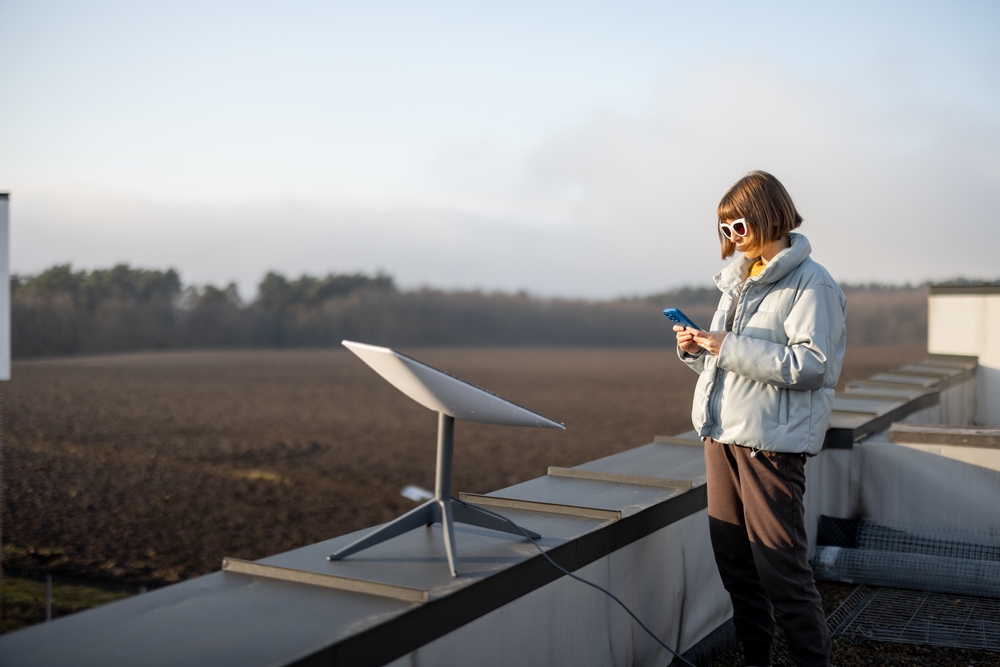
As Starlink’s Direct-to-Cell technology moves from testing to implementation, one thing is clear: the future is coming, whether we’re ready for it or not. Soon, the question won’t be “Can you hear me now?” but rather “Can you ever not hear me?”
For the global elite, this technology promises a world of unparalleled connectivity and convenience. Manage your hedge fund from Machu Picchu, close deals while crossing the Sahara, or simply stream your favourite show while your private jet crosses the Atlantic. The world truly will be your oyster, with a side of unlimited data.
But as we marvel at the technical achievements and potential benefits, it’s worth taking a moment to consider what we might be losing. In our rush to connect every corner of the globe, are we sacrificing the last bastions of solitude and reflection? In our quest for constant communication, are we forgetting the value of silence?
As the satellites multiply overhead and our phones buzz with ever-increasing urgency, perhaps the true luxury in the future won’t be the ability to connect from anywhere, but the ability to disconnect at will. Maybe the next big app won’t be about sharing or liking or streaming, but about finding those increasingly rare spots on the planet where you can look up at the night sky and see only stars, not satellites.
But until that day comes, strap in, power up, and prepare for a world where “off the grid” is just another nostalgic concept, like privacy or a livable climate. Welcome to the future, where the sky’s no longer the limit – it’s just another place to check your email.
As we stand on the brink of this new era of hyper-connectivity, it’s hard not to feel a mix of awe and trepidation. Starlink’s Direct-to-Cell technology, along with similar initiatives from other tech giants, promises to reshape our world in ways we’re only beginning to understand.
For the readers of this esteemed publication – the movers, shakers, and wealth-makers of the world – this technology offers unprecedented opportunities. The ability to stay connected and in control from any point on the globe is undoubtedly a powerful tool. It’s like having a super-power, albeit one that comes with an expensive monthly subscription and the potential for catastrophic battery drain.
But as we embrace this brave new world, let’s not forget the value of disconnection. In our rush to be always available, always online, always “on”, we risk losing something fundamentally human – the ability to be present in the moment, to find solitude, to escape.
Perhaps the true mark of success in the future won’t be the ability to make a deal from the top of Kilimanjaro, but the luxury of being able to turn it all off without fear of missing out. Maybe the ultimate status symbol won’t be the latest iMusk or Galaxy Universe phone, but a cabin in the woods with no reception whatsoever.
As Starlink and its ilk continue to push the boundaries of what’s possible, it’s up to us to decide how to use these tools wisely. Will we allow them to control us, or will we control them? Will we use this unprecedented connectivity to bring the world closer together, or will we simply find new ways to distract ourselves from the problems at our feet?
Only time will tell. In the meantime, if you need me, I’ll be investing in underground bunker real estate. I hear it’s the next big thing in the “digital detox” market. After all, in a world where you can get a signal anywhere, the only place left to hide might be down.
Now, if you’ll excuse me, I need to check my phone. I think I just got a notification from my broker about some hot new space-based ETFs. The future waits for no one, especially those with portfolios to manage.

Explore how AI-driven technology is reshaping family office operations and strategies in 2026.

Family offices are increasingly investing in AI technology to enhance operations and decision-making. Discover the latest trends.

Explore how AI integration is reshaping family office strategy and operations in 2026.
Protected by reCAPTCHA — the Google Privacy Policy and Terms of Service apply.
Join the discussion
Comments are open to signed-in members. Sign in to add yours, or apply to join the network.
Sign in Apply for FON+