
The Allure of Luxury Collectibles: A Family Office Perspective
Discover why luxury collectibles are becoming essential assets for family offices.

Where the World’s Wealthiest Gamblers Stay, Eat, Play—and Sometimes Lose Fortunes
Las Vegas has always been a city built around money.
But there is a Vegas that most visitors never see.
Behind the neon, packed casino floors and $25 blackjack tables is another world—one populated by billionaires, hedge-fund managers, entrepreneurs, professional athletes, entertainers and international business titans who can wager more money in a single evening than many people will earn in a lifetime.
For these players, Las Vegas isn’t simply a vacation destination. It is a private ecosystem of luxury hotels, casino hosts, high-limit gaming rooms, private jets, multimillion-dollar residences, celebrity chefs, security teams and suites that can cost tens of thousands of dollars a night.
And sometimes, the gambling stakes are extraordinary.
One of the most famous examples is businessman Terry Watanabe, whose gambling activity became one of the most spectacular documented losing streaks in Las Vegas history. Reports surrounding his 2007 gambling spree described hundreds of millions of dollars in wagering and losses that have been reported at well over $100 million.
Then there are the celebrity gamblers.
Michael Jordan has long been associated with high-stakes gambling. Charles Barkley has openly discussed losing tens of millions of dollars over his lifetime. Phil Mickelson has become one of the most heavily discussed professional-athlete gamblers in America. Guy Laliberté, the billionaire founder of Cirque du Soleil, has participated in some of the world’s largest poker games.
The common denominator isn’t simply wealth.
It is access.
At the highest levels of Las Vegas gambling, the experience is fundamentally different from what the average tourist encounters.

A typical Las Vegas visitor checks into a hotel, walks through the casino, finds a restaurant and eventually heads to the gaming floor.
A billionaire may never see most of those areas.
The trip can begin at a private terminal, continue through a chauffeured vehicle and end at a private entrance to a hotel suite.
The suite may have its own elevator, dining room, bar, pool, theater, massage area or gaming room.
A personal assistant may have already arranged the restaurants.
A casino host may have reserved a private gaming salon.
A chef may be preparing dinner.
A security team may have inspected the property.
And the gambling can take place behind closed doors.
That is the real luxury of Las Vegas at the highest level: privacy and access.
Money buys plenty of things in Vegas. But for the ultra-wealthy, the most valuable commodity is often the ability to avoid the public experience entirely.
For families like ours, it was never really about the gambling — it’s all about the experience.
— Kevin S., a San Diego-based family office principal and frequent Las Vegas visitor
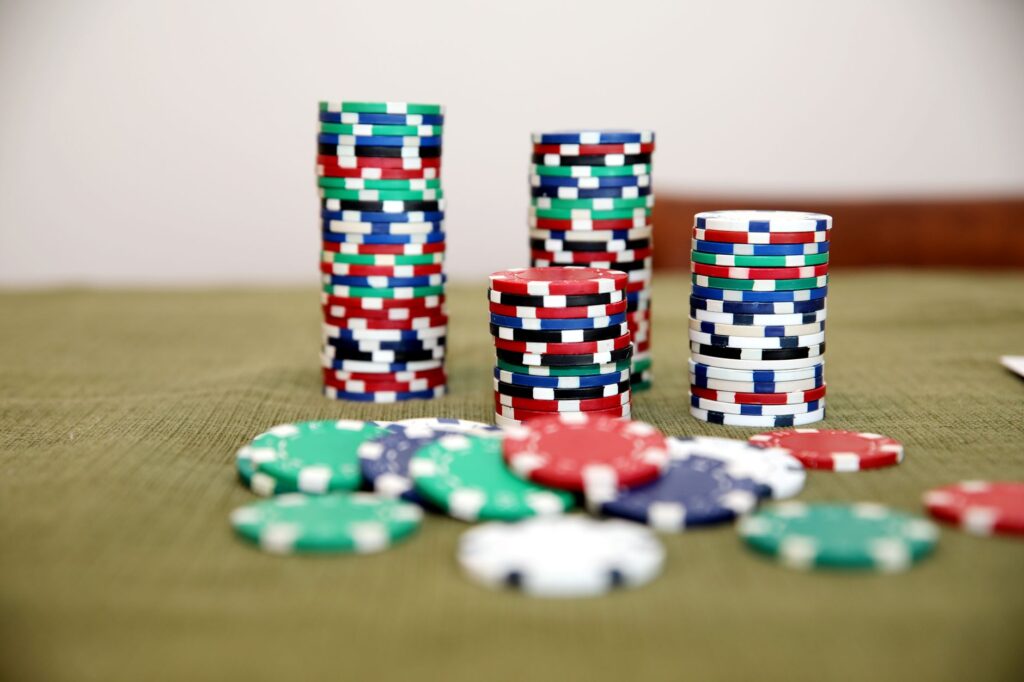
Casinos have a name for their most valuable customers:
Whales.
A whale isn’t necessarily a billionaire. A wealthy entrepreneur, professional athlete or business owner can qualify if his or her gambling volume is sufficiently large.
The casino isn’t looking at the size of someone’s house.
It’s looking at how much money the person is willing to put at risk.
At the highest level, a player might wager hundreds of thousands—or millions—during a single visit.
The mathematics become extraordinary very quickly.
Imagine a player betting $100,000 per hand at baccarat.
At 50 hands an hour, the theoretical amount wagered can reach $5 million in an hour.
That doesn’t mean the player necessarily loses $5 million. The same money can circulate repeatedly.
But it demonstrates why a handful of players can become enormously valuable to casinos.
The casino is effectively selling an experience to someone for whom ordinary gambling limits are irrelevant.
Among the most remarkable stories in modern Las Vegas gambling history is Terry Watanabe.
Watanabe, who inherited and later sold a successful business, became one of the biggest casino customers in Las Vegas during the 2000s.
His 2007 gambling activity became legendary.
Reports have described approximately $825 million in wagers during that year and losses that have been reported in the range of more than $100 million, with some calculations putting the figure around $200 million.
The numbers are difficult to comprehend.
But the important point is not simply the amount lost.
It illustrates how the casino business operates at its highest level.
When someone is capable of wagering hundreds of millions of dollars, the relationship between customer and casino changes dramatically.
The player receives enormous attention.
The casino receives enormous theoretical revenue.
And the host becomes something closer to a private relationship manager than a traditional casino employee.
Few celebrity gamblers are more famous than Michael Jordan.
The billionaire NBA legend has long been associated with gambling, from golf wagers to casino games and sports betting.
Jordan’s gambling reputation became part of his public mythology decades ago.
But there is an important distinction between reputation and documented losses.
There is no reliable public accounting of Jordan’s lifetime casino losses.
That hasn’t stopped him from becoming one of the world’s most famous high-stakes gamblers.
And perhaps that is part of the mystique.
Jordan has spent his entire career operating at the highest level of competition.
For him, gambling appears to have been less about the money than the competition.
In Las Vegas, that attitude is particularly valuable.
Casinos understand that some wealthy customers aren’t looking for entertainment.
They’re looking for action.
Charles Barkley has been much more candid.
The Hall of Fame basketball player has publicly discussed his gambling and acknowledged losing enormous sums over the years.
Barkley has spoken about losing approximately $25 million gambling.
He has also described playing extraordinarily high-stakes blackjack.
Unlike many wealthy gamblers, Barkley has not tried to hide the fact that gambling has sometimes been a serious financial problem.
His story illustrates another side of billionaire Vegas.
The ultra-wealthy may have more money than most people can imagine—but they are not immune to the psychology of gambling.
The casino doesn’t care whether someone is a billionaire or a professional athlete.
Once the chips are on the table, the mathematics are the same.
Phil Mickelson represents another category: the professional athlete who reportedly combines extraordinary wealth with extraordinary gambling volume.
Mickelson’s gambling has been the subject of extensive reporting and controversy for years.
Reports and discussions surrounding his gambling activity have described enormous betting volume over his lifetime.
Importantly, enormous betting volume is not the same thing as enormous losses.
A person can wager hundreds of millions of dollars over many years and ultimately lose considerably less—or even finish ahead.
But Mickelson’s name demonstrates how deeply gambling can intersect with the lifestyles of America’s wealthiest athletes.
For a person accustomed to competing for millions of dollars on a golf course, the psychological transition to putting hundreds of thousands of dollars on a sporting event may not feel as dramatic as it would to the average person.
Guy Laliberté represents the billionaire entrepreneur side of Vegas.
The founder of Cirque du Soleil became famous not only for building one of the world’s most successful entertainment companies but also for his participation in enormous poker games.
Laliberté has played some of the biggest poker games in the world.
High-stakes poker attracts a unique class of wealthy individuals because the game combines money with strategy, psychology and competition.
For billionaire entrepreneurs, it can feel less like gambling and more like another form of competitive decision-making.
Of course, the distinction can disappear very quickly when the stakes become enormous.
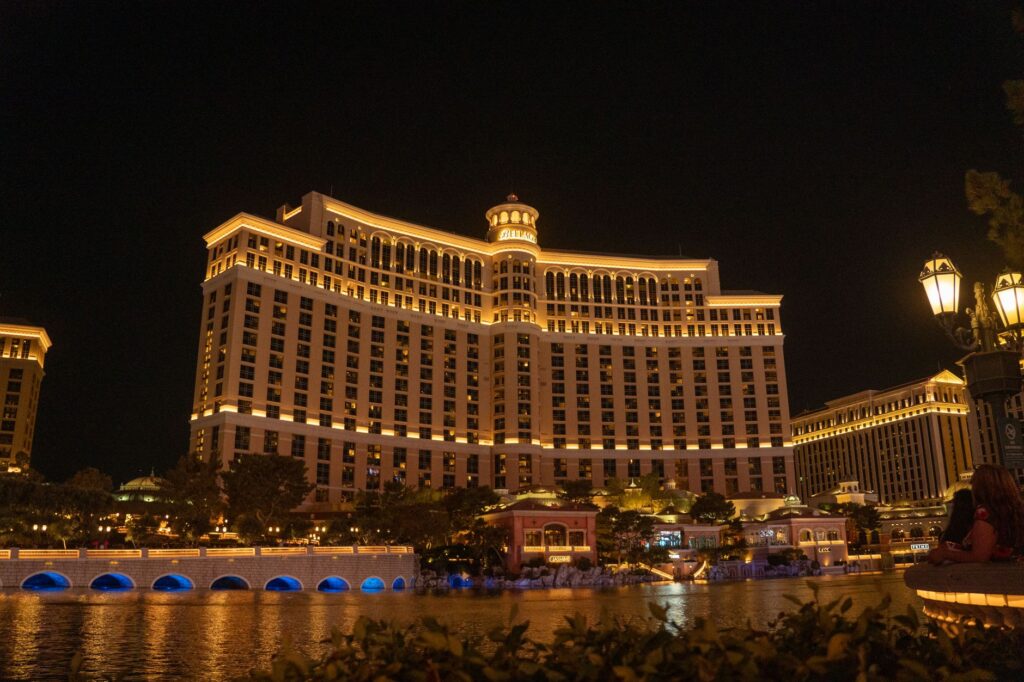
The ultra-wealthy have several options in Las Vegas.
But the most important properties are not necessarily the hotels with the biggest signs.
They’re the properties capable of delivering privacy, luxury and access.
For many wealthy visitors, Wynn is the benchmark.
Wynn combines luxury accommodations, restaurants, nightlife, shopping, golf and high-end casino gaming within one integrated environment.
Its villas and high-end suites are designed for guests who expect substantially more than a hotel room.
The property can arrange highly personalized service, transportation, dining and entertainment.
For a billionaire who wants to gamble without sacrificing luxury, Wynn is difficult to beat.
The Mansion is designed around privacy.
It provides an experience that feels dramatically different from the main MGM Grand resort.
For an extremely wealthy individual traveling with family, friends, executives or security personnel, that privacy can be more valuable than a spectacular view of the Strip.
Caesars has some of the most extravagant accommodations in Las Vegas.
Its villas can reach extraordinary sizes and include private pools, butler service, private elevators, entertainment spaces and luxurious outdoor areas.
These aren’t hotel rooms.
They’re private residences inside a casino resort.
Then there is the Empathy Suite.
At approximately 9,000 square feet, the two-story suite is one of the most outrageous accommodations in Las Vegas.
It features a private pool, terrace, bar, gaming area and artwork associated with British artist Damien Hirst.
The suite has been marketed at an astonishing $100,000 per night for certain packages.
At that price, the room isn’t really a hotel room.
It’s an experience—and a statement.
Not every billionaire stays in a hotel.
Las Vegas has developed an enormous luxury residential market around communities such as Summerlin, The Ridges, MacDonald Highlands and Lake Las Vegas.
A billionaire can own or rent a multimillion-dollar residence, bring in a private chef, security staff and household employees and essentially create a private resort.
The casino then becomes an excursion rather than the home base.
For some UHNW visitors, that is preferable.
Why walk through a lobby when you can have a vehicle take you directly from your residence to a private casino entrance?

Las Vegas has become one of the world’s great dining destinations.
The billionaire visitor has access to restaurants from some of the world’s most famous chefs.
At Wynn, restaurants such as SW Steakhouse, Sinatra, Wing Lei and Delilah provide everything from classic steakhouse dining to sophisticated Chinese cuisine and celebrity-driven nightlife.
At Caesars Palace, Restaurant Guy Savoy offers an entirely different experience.
Bellagio has Prime Steakhouse.
MGM Grand is home to Joël Robuchon and L’Atelier de Joël Robuchon.
ARIA offers restaurants such as Carbone.
The difference at the highest level isn’t necessarily the menu.
It’s the service.
For a billionaire, a restaurant may be asked to accommodate a private party, close a room, create a custom menu or provide an experience that cannot be purchased through a standard reservation.

Las Vegas also benefits from one of the most important elements of the billionaire lifestyle:
private aviation.
A wealthy visitor can arrive without ever interacting with the conventional airport experience.
A private aircraft arrives.
A vehicle is waiting.
Security moves the guest through the property.
The hotel has already prepared the suite.
The casino host is waiting.
Dinner is scheduled.
The gaming room is ready.
That is what makes Las Vegas uniquely attractive to the ultra-rich.
The city has built an infrastructure designed to turn money into convenience.
Every major casino wants whales.
But the competition for high-value players is intense.
Wynn, Bellagio, Caesars Palace, MGM Grand, ARIA, Resorts World and other major properties compete for customers who can potentially generate millions of dollars in gaming revenue.
For these customers, casinos can offer extraordinary incentives.
Complimentary suites.
Private transportation.
Restaurant access.
Entertainment.
Dedicated hosts.
Casino credit.
Private gaming.
The economics are straightforward.
A casino doesn’t need millions of ordinary visitors to create a profitable customer.
One extraordinarily wealthy customer can become an important relationship.
Perhaps the biggest misconception about billionaire Vegas is that the wealthiest people necessarily want the biggest and flashiest experience.
Often, the opposite is true.
The wealthiest guest may want the suite nobody knows about.
The restaurant table that isn’t visible from the main dining room.
The private elevator.
The casino room without cameras or spectators beyond what security requires.
The private vehicle.
The dedicated host.
The ability to arrive and leave without attracting attention.
In other words, the ultimate Vegas luxury isn’t necessarily extravagance.
It’s discretion.
Las Vegas will always be a city where fortunes change hands.
For most people, gambling is entertainment.
For high rollers, it can become a business relationship.
And for a tiny number of ultra-wealthy gamblers, it can become something far more consequential.
The stories of Terry Watanabe, Michael Jordan, Charles Barkley, Phil Mickelson and Guy Laliberté demonstrate that extraordinary wealth doesn’t eliminate the attraction of risk.
In fact, it can amplify it.
The biggest gamblers aren’t necessarily the people who have lost the most.
And the person who wagers the most isn’t necessarily the person who is the wealthiest.
But the intersection of enormous wealth, competition, luxury and risk has created one of the most fascinating subcultures in the world.
That is the real Billionaire Vegas.
It exists behind the velvet ropes, inside private villas, around baccarat tables and in high-limit rooms where a single hand can be worth more than the average American home.
For the public, Las Vegas is about the Strip.
For the ultra-wealthy, Las Vegas is about access.
And somewhere behind those doors, the next billion-dollar story may already be taking place.
Discover why luxury collectibles are becoming essential assets for family offices.

Discover how family offices are redefining luxury asset investments in 2026.
Family offices are redefining fine art ownership, merging investment with passion and heritage.
Protected by reCAPTCHA — the Google Privacy Policy and Terms of Service apply.
Join the discussion
Comments are open to signed-in members. Sign in to add yours, or apply to join the network.
Sign in Apply for FON+