Direct Investment Trends Shaping Family Office Strategies
Explore how direct investment trends are transforming family office strategies in 2026, driving flexibility and innovation in capital allocation.
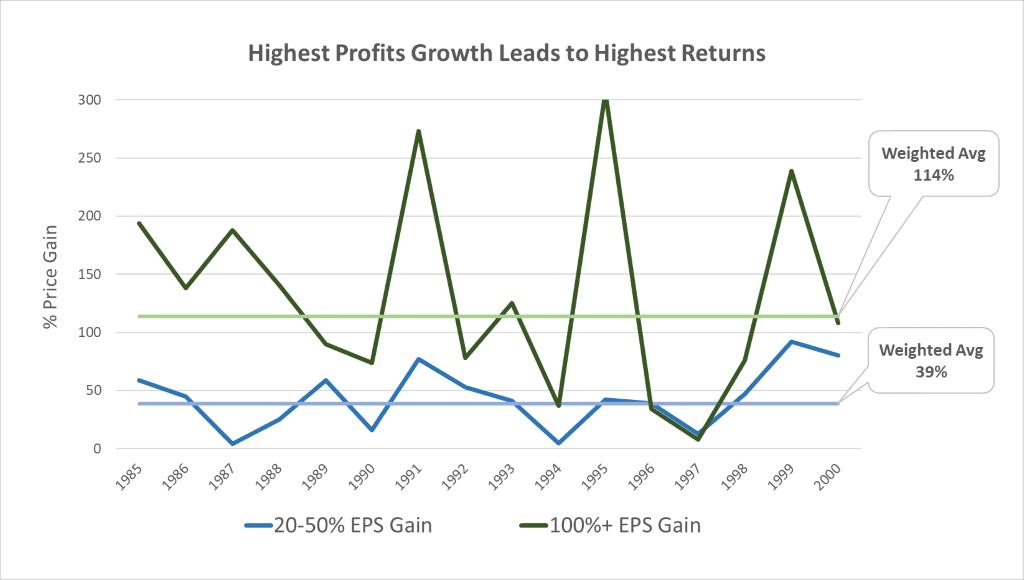
A Little Secret Regarding Profits Growth
By Robert Zuccaro, Target QR Strategies
Many years ago, Digital Equipment, the second largest computer manufacturer after IBM in the early 1990s was increasing its profits every year, but the stock did not go up in four years. Why? Its P/E was contracting during that four-year period. Why? The rate of profits growth was decelerating.
Let’s consider the implications of contracting profits growth in the context of taking compounding into account. A stock growing its profits at a 40% annual clip drops to a 35% rate which most investors are still comfortable with because it is still a lot faster than corporate profits growth of approximately 7% a year. The growth rate has declined by 13%. However, if you compound the new, lower rate of 35% over 10 years, you end up with 30% less profits than at the higher rate.
Most investors don’t understand this phenomenon or pay attention to it; we do and sell stocks with decelerating growth rates because we have observed that the P/Es of such stocks will decline proportionately more than the magnitude of reduction in the growth rate. Want proof?
The stocks we have sold this year triggered by decelerating profits growth have underperformed the S&P 500 from the time of exit to date. Their growth rates are still far greater than corporate profits growth, but their P/Es are quietly making adjustments to a lower level of expectations. The reverse of this paradigm is also true. We look for profit acceleration given that P/Es expand more than proportionately when there are expectations of an increase in profits growth. This is just one more way that we use research to our advantage.

Explore how direct investment trends are transforming family office strategies in 2026, driving flexibility and innovation in capital allocation.

Explore how flexibility in family office investing can enhance capital allocation strategies and lead to better opportunities.

Explore how the permanent $15 million estate tax exemption impacts family offices and wealth planning strategies.
Protected by reCAPTCHA — the Google Privacy Policy and Terms of Service apply.
Join the discussion
Comments are open to signed-in members. Sign in to add yours, or apply to join the network.
Sign in Apply for FON+