Family Offices Accelerate Health Tech Investments in 2026
Family offices are increasingly investing in health tech, reshaping the healthcare landscape.


A Post COVID-19 United States – What is Happening to Healthcare?
There isn’t one person we know who is not stunned by the catastrophic events and incalculable economic harm from the COVID-19 pandemic here in the U.S. and throughout the world. For years, we have praised the strength and resilience of our healthcare sector, and the economic stability that it brought by virtue of it representing 18% of the nation’s Gross Domestic Product – one of the largest individual sectors of the U.S. economy. Healthcare has maintained its upward trend in growth through some of the worst economic recessions in the last 50 years and has remained a steady employer with employment numbers increasing year-on-year. Sadly, not this time, as over 1.4 million healthcare professionals have either been furloughed or lost their positions as of June 2020. Even though many people are beginning to return to work, there are still a stunning number of those facing dismal prospects today, as the economic damage is forcing hospital bankruptcies and physician practices to permanently close.
Healthcare is changing, is being forced to change and what appeared to be relatively minor flaws on the surface, have proven to be major faults that, in just a few months, have nearly brought the behemoth healthcare delivery system to a near complete halt. For these faults to be repaired the U.S. healthcare system must change dramatically in several areas. The very fact that many regulations have been suspended, speaks to the fact that there have been problems all along and that we have merely become accustomed to our “work arounds” instead of fixing the underlying problems. The critical shortfalls in the U.S. healthcare system must be addressed and addressed NOW!
Problems
Healthcare in the United States is a very complex industry, made even more so by the plethora of federal and state regulations; therefore, no single solution or “silver bullet” can put the industry back on its feet. Although many problems have been brought to light by this pandemic, we find many centered around two general categories: first, what we will refer to as Structural Failures, and second is Technology Failures or more specifically Universal Data Access. The problems in these categories have existed for many years in the healthcare industry, and like a lumbering giant, the industry has continued to plod along stepping over, around or simply ignoring the issues until the pandemic brought progress to a halt! Now, these issues must be faced, and healthcare must transition.
We have witnessed huge providers of care seek out technology solutions, and stumble to adapt or even work around technology issues once they get them. We have also been watching technology companies with solutions, looking at the problems and bringing their best to providers only to find their technology was a ‘square peg in a round hole.’ These two groups have been working around each other and this circular process must end.
For several years, we had been planning these transitions taking place; however, we did not expect to see them occurring in such an accelerated time frame. The healthcare industry is not one that embraces change quickly or easily, yet the pandemic has clearly jolted the foundations of this giant; changes that we expected, even discussed taking 10 years, are now happening in 10 quarters or 2.5 years.
In the following paragraphs, we want to hit two key categories that we believe require material change and transformation.
Structural Failures – Patient Care and Capacity
Technology Failures – Universal Data Access
The pivotal issue in Universal Data Access is the electronic health record (EHR) systems. After nearly 10 years and more than USD $100B invested, we still do not have digital patient medical records that are universally and seamlessly exchanged between different systems, or better yet, one universal medical record that follows the patient. This greatly inhibits the usefulness of patient medical records to only the provider who has that record, unless other providers for that patient operate on the same EHR system.
The United States depends on a healthcare infrastructure that is comprised nationally of a total of 5,686 hospitals and 914,613 beds. In addition, there are nearly 1,000,000 doctors (MDs and DOs) that serve both in the hospital and in private practice. These numbers were ‘pre-COVID’ and it is expected that due to provider attrition and bankruptcies of hospitals, these numbers should be reduced by upward of 10% to in some areas, even 20%.
Losses in community-based care has an impact on all segments of the population, from infants and children to adults and the elder population. Attrition of primary care providers is a looming crisis in the healthcare delivery model – a model that needs a major transformation, quickly.
As you have read, the failures in Structural and Technology are impossible to separate today, and the industry looking forward must deal with that. Today, post-COVID-19, we are more convinced than ever that “technology-infused healthcare,” including elements such as Internet of Things (IoT) / wearable device technology and remote patient care, telemedicine, robotics and Artificial Intelligence (AI) are required, at the appropriate touchpoints, to ensure that a comprehensive healthcare-driven application of technology occurs. All of these can provide care to nearly every demographic in our population from youth to the growing number of Baby Boomers exiting the workforce and “at risk” seniors in a quality and cost-effective way, as well as aid in preparing for the next pandemic. The numbers strongly suggest that in the next 10 to 20 years, healthcare will be the main business in the United States, as well as the remainder of the developing world, and in the U.S. we believe it could easily rise to consume 25% of GDP, or more, as we extend life expectancy and optimistically, quality of life.
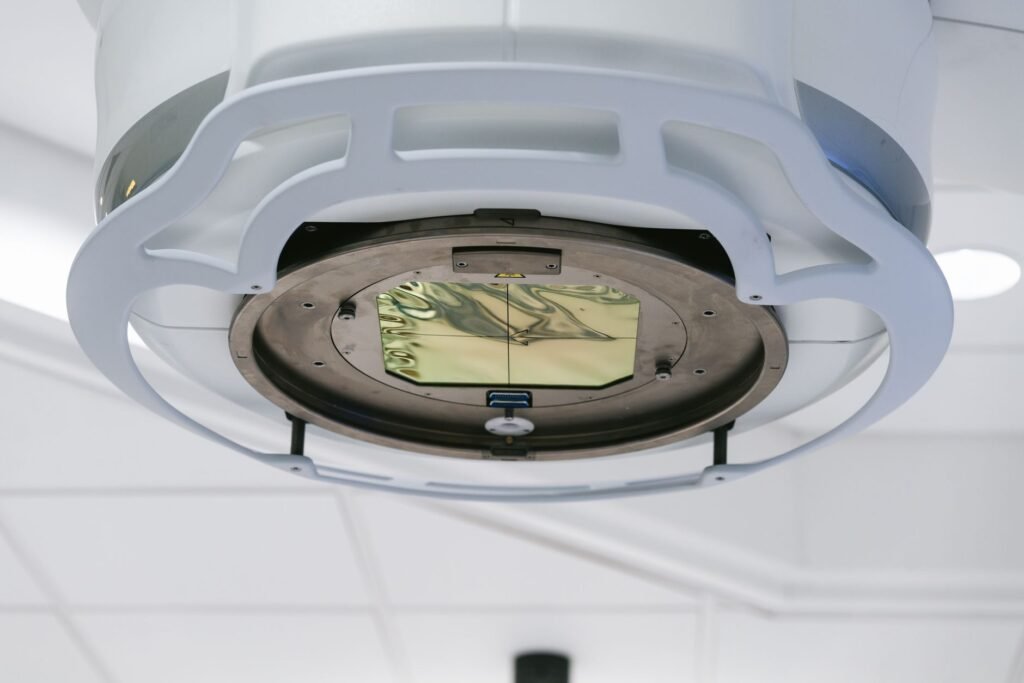
Family offices are increasingly investing in health tech, reshaping the healthcare landscape.

Family offices are increasingly investing in health tech. Discover key trends driving this shift.

Family offices are increasingly focusing on health tech investments as a strategic priority. Discover the trends driving this shift.
Protected by reCAPTCHA — the Google Privacy Policy and Terms of Service apply.
Join the discussion
Comments are open to signed-in members. Sign in to add yours, or apply to join the network.
Sign in Apply for FON+