Trust and Community: Building Resilience in Family Offices
Explore how trust and community drive resilience in family offices, especially in challenging times.

Ah, emotional intelligence in leadership. The buzzword that’s been flitting around boardrooms and executive retreats like a particularly persistent fly at a champagne brunch. For those of you who’ve been too busy counting your millions (or billions, let’s not be modest) to notice, emotional intelligence is apparently the secret sauce that transforms a run-of-the-mill, obscenely wealthy magnate into a true titan of industry. Who knew that understanding feelings could be just as important as understanding profit margins? Certainly not your father, who built this empire with nothing but grit, an Ivy League education, and a small loan of a few million pounds from his own father.
But fear not, dear reader. Whether you’re a third-generation heir wondering why your employees don’t seem terribly motivated by your threats to replace them with robots, or a self-made tycoon puzzled by the lack of standing ovations every time you enter a room, this guide is for you. Buckle up as we navigate the treacherous waters of human emotion with all the grace of a bull in a Wedgwood shop.
Part I: What is Emotional Intelligence, and Why Should I Care?
Section 1: Defining Emotional Intelligence (or “Feelings for Dummies”)
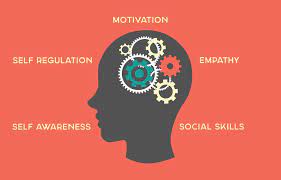
Emotional intelligence, or EQ as it’s known by those who love a good acronym, is the ability to recognise, understand, and manage our own emotions, as well as the emotions of others. It’s like having a superpower, except instead of flying or invisibility, you get to navigate social situations without causing an international incident or a mass employee exodus.
Key components of emotional intelligence include:
Section 2: Why Emotional Intelligence Matters (or “Feelings: Not Just for Poor People Anymore”)
You might be wondering, “Why should I, Archibald Moneybags III, care about emotional intelligence? I have people to handle emotions for me.” Well, dear Archibald, let me enlighten you:
Part II: Developing Emotional Intelligence (or “Teaching an Old Dog New, Feelings-Based Tricks”)
Section 1: Self-Awareness: Getting to Know You (The Horror!)
The journey to emotional intelligence begins with self-awareness. Here are some strategies to increase your self-awareness:
Section 2: Self-Regulation: Keeping Your Cool (When Your Cognac Isn’t)
Once you’re aware of your emotions, the next step is learning to manage them. Here are some tips:
Section 3: Motivation: Finding Your Drive (Besides Money, Obviously)
Understanding what motivates you (and others) is crucial for emotional intelligence. Here’s how to tap into motivation:
Section 4: Empathy: Walking a Mile in Another’s Shoes (Even if They’re Not Gucci)
Empathy is often the most challenging aspect of EQ for those born with a silver spoon firmly lodged in their mouth. Here’s how to develop it:
Section 5: Social Skills: Charm School for the Charismatically Challenged
Finally, let’s work on those social skills. Here are some tips to help you navigate the complex world of human interaction:
Conclusion: The Emotionally Intelligent Leader (A Rare Species Indeed)
As we conclude our journey through the treacherous terrain of emotional intelligence, you may find yourself wondering, “Is all this feeling stuff really necessary? Can’t I just continue to rule my empire with an iron fist and a cold heart?”
The answer, dear reader, is yes, you can. But should you? In a world where loyalty is as rare as a humble billionaire, and where your workforce has options beyond indentured servitude, perhaps it’s time to consider a new approach.
Emotional intelligence in leadership isn’t just about being nice (although that wouldn’t kill you, would it?). It’s about being effective. It’s about creating an environment where people want to work for you, not just because you pay them, but because they feel valued, understood, and motivated.
Imagine a world where your employees don’t visibly wince when you enter a room. Picture board meetings where people contribute ideas without fear of being fired, laughed at, or both. Envision a company culture where innovation thrives because people feel safe to take risks and learn from failures.
This is the world that emotionally intelligent leaders create. And let’s be honest, it sounds a lot less exhausting than constantly having to replace staff and fend off coup attempts.
So, as you sail off into the sunset on your mega-yacht, ponder this: Perhaps the greatest luxury isn’t another zero in your bank account, but the ability to connect meaningfully with those around you. To lead not through fear and intimidation, but through understanding and inspiration.
And if all else fails, remember: you can always buy a self-help book and have someone read it for you.

Explore how trust and community drive resilience in family offices, especially in challenging times.

Explore how networking shapes family office success and investment strategies in 2026.

Explore how community and collaboration drive family office success in 2026.
Protected by reCAPTCHA — the Google Privacy Policy and Terms of Service apply.
Join the discussion
Comments are open to signed-in members. Sign in to add yours, or apply to join the network.
Sign in Apply for FON+