Direct Investment Trends Shaping Family Office Strategies
Explore how direct investment trends are transforming family office strategies in 2026, driving flexibility and innovation in capital allocation.
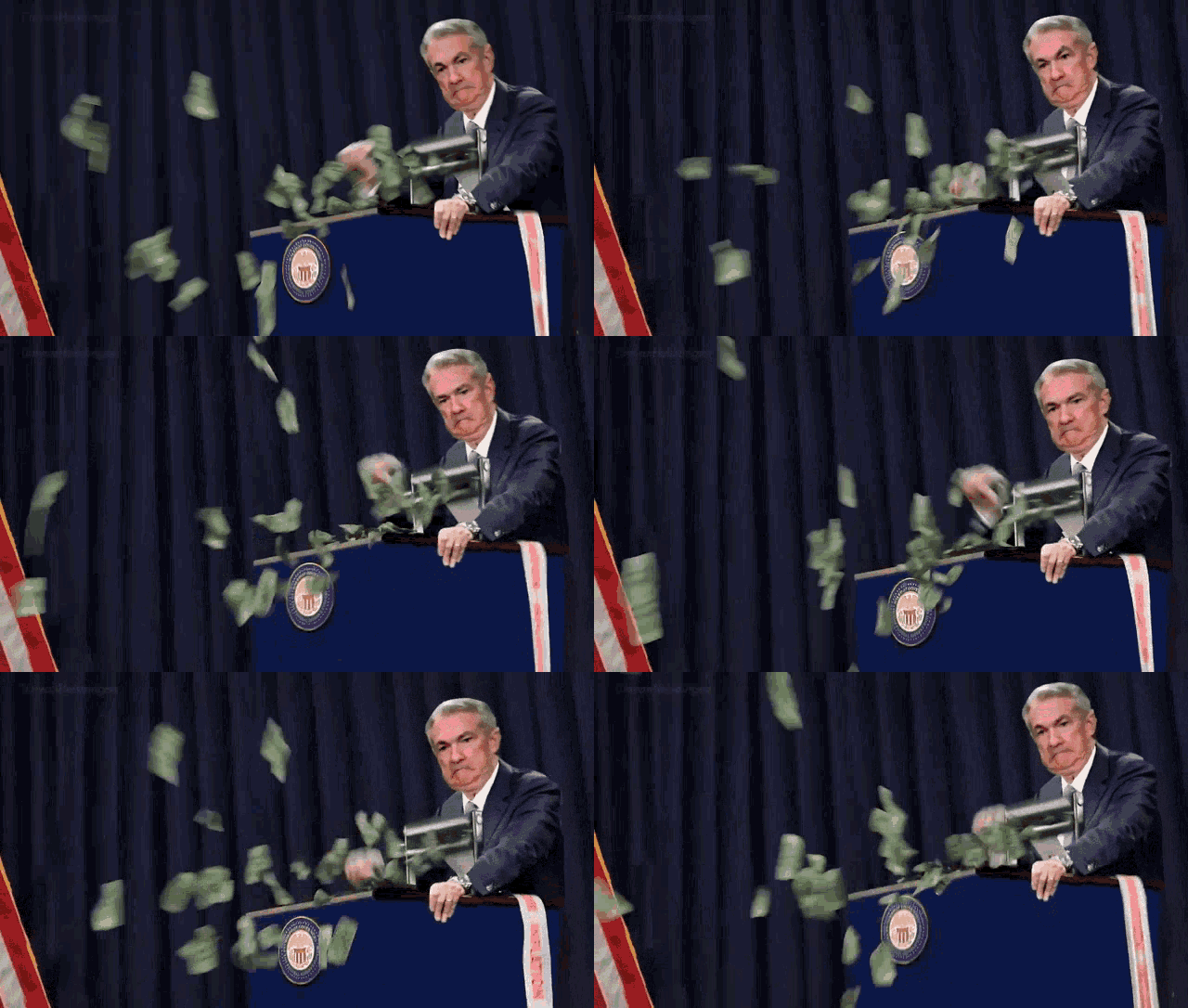
As you navigate the complex world of finance, you may have heard whispers of the “Powell Slice” – the Federal Reserve’s recent decision to cut interest rates for the first time in over four years. This pivotal move has sent ripples through the economic landscape, leaving many wondering about its implications. From its impact on credit card payments and real estate markets to its potential effects on the upcoming election, the ramifications of this rate cut are far-reaching. In this article, we’ll explore the motivations behind the Fed’s decision, examine potential outcomes, and analyze how this change might affect both the ultra-wealthy and the average consumer in the months to come.
The Federal Reserve’s decision to cut interest rates by 0.5 percentage points marks a significant shift in monetary policy. This interest rate cut, the first in over four years, brings the federal funds rate to around 4.9%. The Federal Reserve, led by Chair Jerome Powell, has made this move in response to evolving economic conditions and concerns about the labor market.
While inflation has cooled to 2.9% as of July 2024, down from its 40-year high of 8% in 2022, the Fed is now more focused on addressing the recent uptick in unemployment. This delicate balancing act aims to maintain price stability while supporting a strong job market. The central bank’s goal is to achieve a “soft landing” for the economy, adjusting its approach as needed based on incoming data and economic forecasts.
The Federal Reserve’s decision to cut interest rates by 0.5% aims to stimulate economic growth and prevent a potential recession. By lowering borrowing costs, the Fed hopes to encourage consumer spending and business investment. This move is designed to keep the U.S. economy “in a good place,” according to Fed Chair Jerome Powell.
The Fed’s mandate involves balancing low inflation with full employment. This interest rate cut signals the Fed’s belief that inflation is under control, allowing them to focus on maintaining economic stability. By reducing rates, the Federal Reserve aims to support job creation and prevent a significant increase in unemployment.
Lower interest rates typically provide a boost to financial markets, improving the outlook for economic growth and corporate profitability. This can drive up stock prices and enhance overall market sentiment, further supporting economic expansion.
The Federal Reserve’s decision to cut interest rates by 0.50 percentage points marks a significant shift in monetary policy. This move, the first rate cut in over four years, comes as the Fed aims to balance its dual mandate of price stability and maximum employment.
According to Fed Chair Jerome Powell, the central bank is “encouraged” by progress on inflation and views the U.S. economy as “strong overall.” The rate cut reflects growing confidence that inflation will soon reach the 2% annual target, coupled with signs of cooling in the labor market.
The Fed’s economic projections suggest further rate cuts are likely, with the federal funds rate expected to decline to 4.4% in 2024 and 3.4% by the end of 2025. This proactive approach aims to support economic growth while carefully monitoring evolving economic conditions.

The Federal Reserve’s decision to cut interest rates by 0.5% has sparked a positive response in the stock market. According to Reuters, the S&P 500 index surged 1.7%, reaching a fresh intraday high. This rally reflects investors’ optimism about the potential economic boost from lower borrowing costs.
The interest rate cut is likely to benefit certain sectors more than others. As noted by Investopedia, dividend-paying stocks like utilities and real estate investment trusts tend to perform well in a low-rate environment. Additionally, large companies with strong balance sheets may take advantage of cheaper debt financing to fuel growth.
While the initial market reaction has been positive, the long-term impact remains uncertain. MarketWatch reports that historically, the two-week period following a rate cut has been unpredictable for investors. The Federal Reserve’s future policy decisions and broader economic indicators will likely play crucial roles in shaping market performance moving forward.
While the Federal Reserve’s interest rate cuts aim to stimulate economic growth, they carry potential risks. According to The Economist, lowering rates could backfire if inflation proves more persistent than expected, undermining the Fed’s credibility. This bold move represents a high-stakes bet on controlling inflation while supporting the labor market.
The rate cuts might create economic imbalances. As reported by USC experts, while lower borrowing costs could boost business investments, they may not significantly thaw frozen housing markets due to high prices and tight supply. Additionally, there’s a risk of investors pressuring startups to expand too rapidly, potentially leading to unsustainable growth.
Policymakers must remain vigilant in balancing economic expansion with long-term inflation control. The Federal Reserve’s gamble on a big interest rate cut could have far-reaching consequences if economic conditions don’t unfold as expected, affecting various sectors from tech to global trade.
Historically, when the Federal Reserve has cut interest rates close to an election, the party controlling the White House has often lost. However, the relationship between interest rate cuts and electoral outcomes is complex. The Federal Reserve, as an independent body, aims to make decisions based solely on economic data, disregarding political rhetoric.
While lower interest rates could provide some relief to consumers through cheaper mortgages and loans, most economists believe the effects will be muted or delayed. The impact on voters’ perceptions before the election may be limited, as views on the economy typically form months in advance. However, with inflation remaining a top concern for 57% of voters, the Federal Reserve’s actions could still influence the political landscape.
While the Federal Reserve has recently implemented interest rate cuts to stimulate economic growth, a return to the historically low 3% mortgage rates seen during the pandemic is unlikely in the near future. According to experts, inflation remains above the Fed’s 2% target, suggesting gradual rate adjustments rather than drastic cuts.
Mortgage rate predictions indicate a gradual decline, with 30-year fixed rates potentially reaching the low 6% range by late 2024 and high 5% territory in 2025. This downward trend is driven by factors such as:
While these projections offer some relief, they suggest that the ultra-low rates of 2020-2021 were exceptional circumstances unlikely to repeat soon.
The Federal Reserve’s recent interest rate cut is poised to impact consumers in several ways. According to News4Jax, this half-point reduction, the first in four years, aims to lower borrowing costs over time. This move by the Federal Reserve will likely influence various aspects of consumer finance:
The rate cut is expected to make borrowing more affordable, potentially stimulating consumer spending. Investopedia notes that lower interest rates often encourage consumers to take out loans for major purchases like homes and cars. However, the impact may not be immediate or dramatic for most consumers.
While beneficial for borrowers, the cut may reduce returns on savings accounts and other interest-bearing instruments. This could prompt consumers to seek alternative investment options to maintain their financial growth in a lower-rate environment.
The Federal Reserve’s primary objective in implementing interest rate cuts is to support economic stability and prevent a potential recession. By lowering the federal funds rate, the Fed aims to stimulate economic growth, maintain full employment, and keep inflation under control. The recent 0.5% cut signals confidence that inflation has moderated sufficiently to ease borrowing costs.
According to experts, the rate cut is expected to benefit consumers through lower borrowing costs on credit cards, mortgages, and auto loans. However, savers may see reduced returns on interest-bearing accounts. The overall impact should boost long-term investments, job creation, and the general well-being of Americans, making it “great news for the middle class.”
In conclusion, the Federal Reserve’s decision to cut interest rates marks a significant shift in monetary policy. While aimed at stimulating economic growth, the impact of this rate cut will be far-reaching and complex. From potentially lower mortgage rates to increased consumer spending, the effects will ripple through various sectors of the economy. However, the long-term consequences remain uncertain, especially considering the upcoming election year. As investors and consumers alike navigate this changing financial landscape, it’s crucial to stay informed and adapt strategies accordingly. Only time will tell if this “Powell Slice” will achieve its intended goals or if further adjustments will be necessary to maintain economic stability in an ever-evolving global market.

Explore how direct investment trends are transforming family office strategies in 2026, driving flexibility and innovation in capital allocation.

Explore how flexibility in family office investing can enhance capital allocation strategies and lead to better opportunities.

Explore how the permanent $15 million estate tax exemption impacts family offices and wealth planning strategies.
Protected by reCAPTCHA — the Google Privacy Policy and Terms of Service apply.
Join the discussion
Comments are open to signed-in members. Sign in to add yours, or apply to join the network.
Sign in Apply for FON+