
Investing in Health Tech: Trends for Family Offices in 2026
Family offices are increasingly investing in health tech. Discover key trends driving this shift.

The Most Expensive Four Years in History
While writing my recent four-part series on the 250th Anniversary of the United States, I unexpectedly found myself looking backward, not just at the history of our country, but at over three decades of observing healthcare.
I realized something unexpected.
For nearly three decades, I had been documenting healthcare from the inside.
Beginning in the mid-1990s, I wrote shareholder letters, SEC disclosures, technical papers, patents, and eventually blogs about healthcare delivery systems, Medicare cost, electronic health records, healthcare technology, artificial intelligence, reimbursement, and the economics of medicine. Like most people working in healthcare, I spent my time solving immediate problem-building systems, serving customers, navigating regulations, and preparing for risks.
Looking back, I realized I had overlooked something far more fundamental.
Every generation inherits assumptions so familiar that few people think to question them. They become part of the landscape. They shape how problems are discussed, how solutions are proposed, and sometimes even determine which questions are never asked.
Healthcare is no exception.
For decades we have debated hospitals, physicians, insurance companies, pharmaceutical manufacturers, technology, reimbursement, and government policy.
Yet one remarkably simple question is rarely asked.
What if we compare what we have spent with what we have actually gained?
So I did the arithmetic.
In 1990, the United States spent $2,566 per person on healthcare. Had healthcare spending simply kept pace with inflation, that figure would be approximately $6,161 today. Instead, Americans spent $15,474 per person in 2024.
That is $9,313 more per person, every year, than inflation alone would predict, a 151 percent increase in real spending. Over an average lifetime, that difference approaches $735,700 for every American.
That number deserves to be read again. Not because it is political. Not because it is controversial. Because it is arithmetic.
Now consider another number.
In 1990, life expectancy in the United States was 75.2 years. In 2024, after recovering from the effects of the COVID-19 pandemic, life expectancy reached 79.0 years. Over thirty-four years, we gained 3.8 years.
Placed beside one another, those numbers become difficult to ignore. If the additional lifetime spending approaches $735,700 while life expectancy increased by 3.8 years, then we have spent approximately $193,600 in additional real dollars for each additional year of life expectancy.
Whether one believes healthcare is overfunded, underfunded, public, private, efficient, or inefficient does not change those numbers.
Arithmetic has no ideology. Arithmetic simply tells us where we are.
But the arithmetic becomes even more interesting when we ask a second question.
Where does all of that money actually go?
It is not spent evenly across a lifetime. Healthcare is remarkably inexpensive through much of childhood and early adulthood. Instead, spending is concentrated at the two ends of life.
The first year of life represents one of the largest spikes in lifetime medical spending. Beginning around age fifty, healthcare spending begins climbing rapidly. Americans age fifty and older represent only about 31 percent of the population, yet account for approximately 56 percent of all healthcare spending.
The final twelve months of life are even more striking.
While the average American spends $15,474 per year on healthcare, spending during the last year of life rises to approximately $37,581. For older Americans, that single year accounts for approximately 22 percent of all senior healthcare expenditures.
The arithmetic has now revealed two mysteries.
The first is obvious: How did healthcare spending increase by 151 percent beyond inflation while producing fewer than four additional years of life expectancy?
The second is less obvious: Why are so many healthcare dollars concentrated at the very beginning and the very end of life?
This notebook will not answer those questions. It will simply establish the arithmetic. Because every investigation begins with knowing where you are before deciding where to go.

From Observation to Architecture
One question we are frequently asked at HealthScoreAI is why we chose to begin by serving adults between the ages of 50 and 70.
The arithmetic in this notebook provides part of the answer.
Healthcare spending accelerates rapidly after age fifty. Chronic conditions become more common. Medication lists grow longer. Specialist visits become more frequent. Diagnostic testing increases. Most importantly, an individual’s medical history often becomes fragmented across multiple physicians, hospitals, laboratories, imaging centers, pharmacies, and insurance plans.
That is also the point in life where better information can have its greatest impact.
Our objective at HealthScoreAI is not simply to build another healthcare application.
It is to build The Consumer Health Intelligence Engine™; a secure platform designed to help consumers assemble a longitudinal view of their health, apply healthcare-specific artificial intelligence to identify potential gaps, identify opportunities for earlier intervention, and empower individuals to become more informed participants in their own care.
We did not choose the 50-to-70-year-old population because it is the largest market. We chose it because the arithmetic suggests it is where empowering the Consumer can have the greatest immediate impact.
This notebook began with a simple question.
How did we spend so much more while gaining so little?
That question led to arithmetic. The arithmetic led to observation. The observations began revealing the architecture of a healthcare system that few people ever have the opportunity to see in its entirety.
The journey has only begun.

Toward Empowering the Consumer™
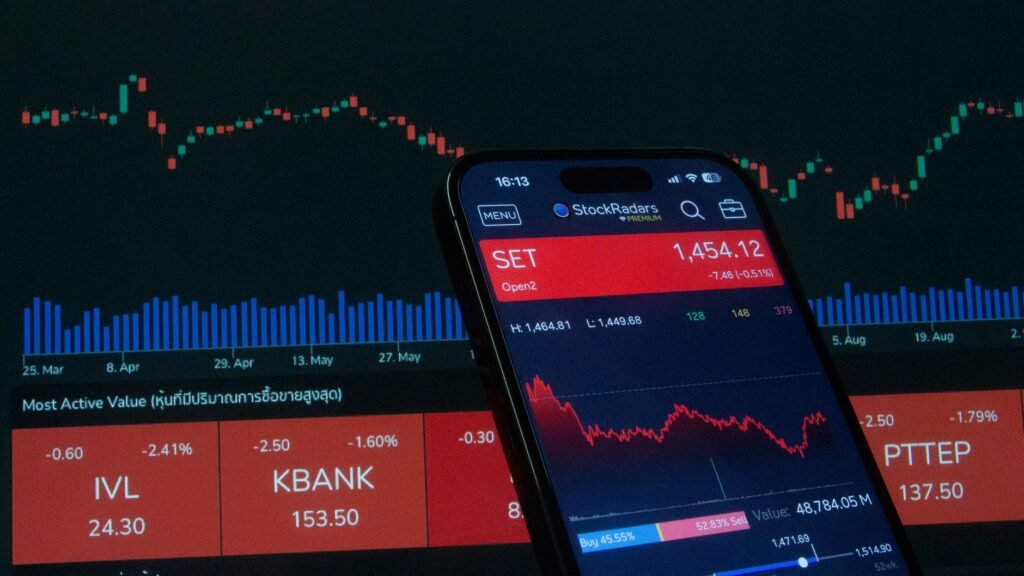
Family offices are increasingly investing in health tech. Discover key trends driving this shift.

Family offices are increasingly focusing on health tech investments as a strategic priority. Discover the trends driving this shift.
Explore how family offices are leading the charge in healthcare investments, shaping the future of health tech and biotech.
Protected by reCAPTCHA — the Google Privacy Policy and Terms of Service apply.
Join the discussion
Comments are open to signed-in members. Sign in to add yours, or apply to join the network.
Sign in Apply for FON+